20305 Biscayne Blvd. Aventura, FL 33180

How to Keep Your Indoor Cat Calm and Safe During Halloween
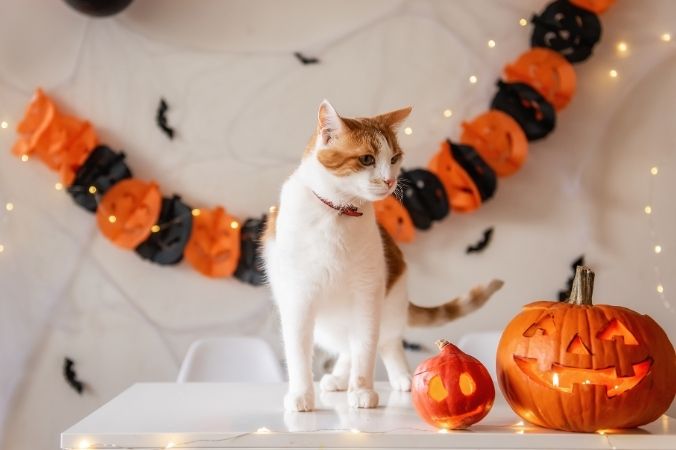
Halloween is a fun night for people, but for indoor cats, it can be one of the most overwhelming nights of the year. Constant doorbell ringing, strangers in strange costumes, flickering lights, and the smell of unfamiliar objects coming through the door create a sensory overload that cats are not wired to handle easily. Knowing how to keep indoor cats safe during Halloween means thinking ahead, because once a cat hits their stress threshold, it’s much harder to bring them back down. Cats are territorial and highly sensitive to disruption in their environment. What looks like a harmless, decorated entryway to you can look like a completely different and threatening space to your cat. This guide covers everything you need to know about protecting your cat’s physical safety and emotional well-being on and around Halloween night.
Why Halloween Is So Stressful for Indoor Cats
To understand how to help your cat, it helps to understand what they’re actually experiencing. Indoor cats build a mental map of their home. They know every smell, every sound, every corner. Halloween disrupts all of that at once.
Decorations change the visual layout of familiar rooms. Fake cobwebs, hanging skeletons, jack-o-lanterns with candles, and motion-activated figures alter the environment in ways cats cannot rationalize. What smells like pumpkin and hot wax and synthetic fabric to a human smells like an invasion to a cat.
An estimated 70% of cats in multi-pet households show signs of chronic low-grade stress that owners never notice, because the symptoms are subtle. On a night like Halloween, that background tension spikes. Cat stress signs at home become much more visible: hiding under the bed, refusing food, over-grooming, or vocalizing in ways that seem out of character.
For black cats specifically, Halloween carries an additional layer of concern. Outdoor access during the week of Halloween should be eliminated entirely, even for cats that normally go in and out. Stress from outdoor exposure on this night, combined with the increased foot traffic, creates real risk of a cat bolting into traffic or becoming lost.
Halloween Dangers for Cats Inside the Home
The threats to your cat on Halloween are not limited to stress alone. Several common halloween dangers for cats are sitting right inside most households during this season.
- Candles in jack-o-lanterns: Cats are naturally curious and will investigate a flickering light. A knocked-over candle is a fire risk and a burn risk.
- Chocolate and candy: Cats are less likely than dogs to eat large amounts of candy, but chocolate and xylitol-containing products are toxic to cats as well. Keep all candy secured.
- Glow sticks and glow jewelry: These are extremely common Halloween accessories and highly attractive to cats. The liquid inside, while not severely toxic, tastes foul and causes intense drooling, foaming, and distress. Prompt veterinary care is the right call.
- Decorative corn, fake spider webs, and small plastic props: These pose choking and intestinal blockage hazards, especially for cats who chew on unusual textures when they’re anxious.
- Essential oil diffusers used for ambiance: Many seasonal scents used in Halloween diffusers, including cinnamon, clove, and pine, are toxic to cats. Their livers cannot process these compounds.
If you notice any of these signs after your cat is exposed to a decoration or substance, contact your veterinarian promptly. Early intervention produces far better outcomes than waiting to see if the symptoms pass.
How to Keep Your Cat Calm on Halloween Night
Preparation is the most effective tool you have. These steps, taken in the days and hours before Halloween, can dramatically reduce your cat’s stress.
- Set up a quiet safe room before trick-or-treating begins. Choose a room your cat already favors. Add their bed, litter box, food, water, and a few familiar-smelling items.
- Play soft background sound. White noise, classical music, or even a low-volume television helps muffle the sounds of doorbells and children. A cat scared of halloween noise benefits significantly from consistent background sound that doesn’t cut out unpredictably.
- Remove or secure all hazardous decorations from accessible areas. Candles should be replaced with battery-operated versions. Small decorative objects should be stored out of reach.
- Do not force interaction. If your cat retreats and hides, let them. Trying to comfort a stressed cat by picking them up or following them can increase anxiety.
- Use a pheromone diffuser. Feline calming pheromone products, available through your veterinarian, can be plugged in two to three weeks before Halloween for best effect. These are clinically supported tools for reducing situational stress in cats.
- Check doors carefully all night. The constant opening and closing of the front door for trick-or-treaters creates escape opportunities. Make sure your cat is secured before opening the door and keep collars with ID tags on.
- After the last trick-or-treater, do a sweep. Pick up any dropped candy wrappers, decorations that fell, or glow sticks from the floor before your cat has unsupervised access to those areas.
How to Calm an Anxious Cat at Home Before and After Halloween
Halloween stress does not always resolve the moment the night ends. Some cats take days to return to baseline, especially if the evening involved a lot of noise or disruption. Knowing how to calm anxious cat at home in the days following is just as important as the night itself.
Routine is the most powerful calming tool for cats. After Halloween, return to your cat’s normal feeding schedule, play schedule, and sleep routine as quickly as possible. Avoid rearranging furniture or bringing new objects into the home for at least a few days.
Interactive play sessions that mimic natural hunting behavior, using a feather wand or a moving toy, help cats discharge stress hormones in a productive way. Even 10 minutes of active play per day can reduce chronic anxiety meaningfully.
A common misconception is that cats simply “get used to” stress over time without any intervention. In reality, repeated high-stress events without recovery support can contribute to long-term behavioral changes, including inappropriate elimination, aggression, and appetite changes. If your cat’s stress signs at home persist beyond a week after Halloween, a veterinary consultation is the right next step.
In Aventura, FL, the combination of warm weather and densely populated neighborhoods means Halloween activity tends to be especially busy outside. Keeping windows closed, running the air conditioning for sound buffering, and reducing outdoor noise exposure during peak trick-or-treating hours can make a noticeable difference.
What to Watch for After Halloween Has Passed
Even if your cat seemed fine during Halloween, spend the day after doing a check of your home and a visual check of your cat.
Look for chewed decorations, missing small objects, candy wrappers that may have been batted under furniture, or any residue from glow sticks or candles. Keep indoor cats safe during Halloween includes the cleanup phase, not just the night itself.
Observe your cat’s behavior for 24 to 48 hours. Reduced appetite, hiding, or changes in litter box use after a stressful event are early indicators that something may be wrong, either physically or emotionally.
If you have any concerns about what your cat may have ingested or about changes in their behavior following Halloween, the team at Amor Animal Hospital is here to help. Quality veterinary care after any suspected exposure or behavioral change ensures your cat stays healthy well beyond the Halloween season. Book an appointment today.
Frequently Asked Questions
Q: Should I keep my indoor cat in a separate room on Halloween?
Ans: Yes, this is one of the most effective ways to protect your cat. Set up a quiet room with everything your cat needs before trick-or-treating begins. This prevents escape opportunities, reduces exposure to noise and decorations, and gives your cat a safe space to decompress.
Q: Are glow sticks dangerous for cats?
Ans: The liquid inside glow sticks is not severely toxic but causes intense oral irritation, drooling, and distress in cats. If your cat chews a glow stick, rinse their mouth with water and contact your veterinarian. Most cats recover quickly with supportive care.
Q: Can Halloween decorations stress out a cat?
Ans: Absolutely. Motion-activated decorations, unusual smells from candles and synthetic materials, and changes to the visual layout of your home can all trigger anxiety in cats. Setting up decorations gradually over a few days and giving your cat time to investigate at their own pace reduces the stress of sudden environmental change.
Q: What are signs my cat is stressed on Halloween?
Ans: Common signs include hiding, refusing food, over-grooming, vocalizing more than usual, and dilated pupils. Some cats become uncharacteristically aggressive when frightened. If your cat shows any of these signs, give them space and a quiet environment rather than trying to comfort them through interaction.
Q: Is it safe to put a Halloween costume on my cat?
Ans: Most cats find wearing a costume extremely stressful and will resist it. If you do try a costume, it must be free of small parts, loose threads, or anything that restricts movement, breathing, or vision. Watch your cat closely for signs of distress and remove the costume immediately if they seem uncomfortable.
Amor Animal Hospital
Schedule Your Pet’s Visit Today
Your pet’s health and happiness are our top priorities. Schedule an appointment today and experience compassionate, expert care tailored to your furry friend’s needs.