20305 Biscayne Blvd. Aventura, FL 33180

Relief Starts When the Itching Stops
in Aventura, FL
Constant scratching, overgrooming, irritated skin, and recurring ear problems can make life miserable for a cat. Many skin conditions do not clear up on their own, and what begins as mild licking or small patches of hair loss can quickly turn into ongoing discomfort. Cats often hide irritation well, so allergies and skin issues may be more advanced by the time pet owners notice something is wrong.
Skin flare-ups can come from several causes, including environmental allergens, food reactions, parasites, fungal infections, or chronic inflammation. Finding the source is often the key to giving a cat lasting relief rather than temporary improvement. Pet owners often spend weeks trying shampoos, diet changes, or home remedies before realizing the irritation keeps returning.
At Amor Animal Hospital, we provide thoughtful evaluations and focused medical care for cats dealing with persistent skin trouble. Families looking for trusted cat allergy treatment in Aventura can count on our team to work toward real answers instead of temporary symptom control.
Understanding Why Skin Problems Keep Coming Back
A cat with irritated skin rarely has a single bad day. Recurring scratching or visible inflammation usually indicates an underlying issue that requires medical attention.
- Environmental Allergies: Dust, pollen, grass, mold, and household particles can trigger itching, red skin, or recurring ear irritation.
- Food-Related Reactions: Certain proteins or ingredients may cause chronic licking, facial scratching, or digestive changes, accompanied by skin inflammation.
- Parasite Sensitivity: Fleas, mites, and other parasites can cause severe skin reactions even when only a few are present.
- Fungal or Bacterial Infections: Skin that has been repeatedly irritated can become vulnerable to secondary infections.
- Inflammatory Skin Conditions: Some cats develop chronic dermatitis that needs long-term management.
Recurring skin problems usually continue until the root cause is identified and addressed.
Signs Your Cat May Need Allergy or Skin Care
Cats are known for grooming, which makes skin problems easy to miss in the early stages. Many pet owners do not realize a medical issue is developing until hair loss or skin damage becomes obvious.
- Excessive Grooming: Constant licking or chewing can signal itchiness beneath the coat.
- Hair Loss Patches: Thin fur or bald spots often develop where a cat repeatedly overgrooms.
- Red or Flaky Skin: Irritated areas may appear inflamed, dry, or scaly.
- Recurring Ear Irritation: Repeated ear scratching or dark buildup can point to allergy-related inflammation.
- Small Scabs or Sores: Tiny bumps around the neck, face, or back are common with allergic reactions.
- Restless Behavior: Cats dealing with constant irritation may become more withdrawn, agitated, or less tolerant of touch.
Persistent skin discomfort affects far more than appearance. It can disrupt sleep, appetite, and daily behavior.
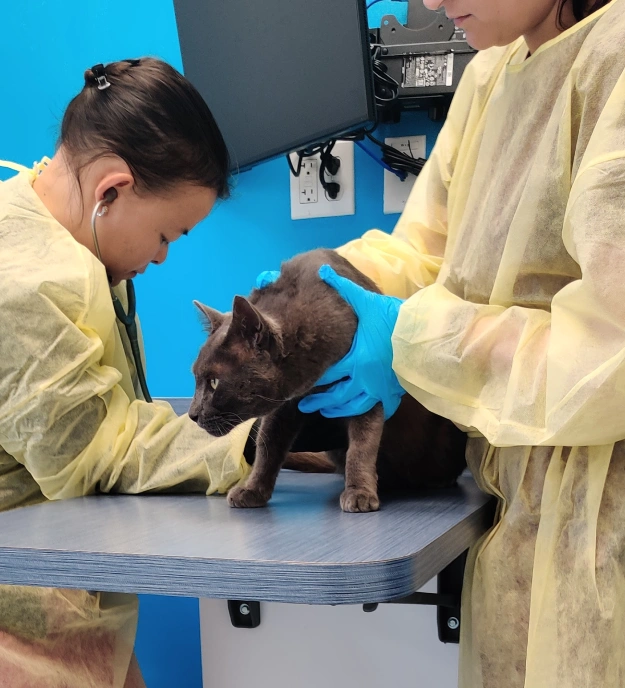
What Happens During a Skin and Allergy Visit
Successful treatment starts with understanding what is actually triggering the skin reaction. Covering symptoms without looking deeper often leads to repeated flare-ups.
- History Review: Our team reviews when the itching started, whether symptoms come and go, any diet changes, indoor and outdoor exposure, and prior treatments.
- Skin Examination: The coat, ears, paws, face, belly, and affected areas are closely checked for redness, lesions, parasites, or signs of infection.
- Diagnostic Testing: Skin scrapings, ear cytology, fungal screening, or other testing may be recommended depending on symptoms.
- Allergy Pattern Evaluation: Recurring seasonal issues, food-related patterns, or chronic inflammatory signs help narrow the likely cause.
- Treatment Planning: Once the trigger is better understood, a medical care plan is created to calm the skin and help prevent repeat irritation.
Common Causes Behind Feline Skin Allergies
Skin conditions in cats can look similar on the outside while coming from very different internal causes. Proper diagnosis matters.
- Flea Allergy Dermatitis: Some cats react intensely to even minor flea exposure, leading to severe itching around the back and neck.
- Food Sensitivity: Certain dietary proteins can trigger chronic skin and ear problems that persist until the diet is changed.
- Atopic Dermatitis: Environmental triggers, such as pollen or dust, can cause seasonal or year-round inflammation.
- Yeast and Bacterial Overgrowth: Irritated skin can become infected, worsening itching.
- Contact Irritation: Bedding, cleaners, sprays, or household materials may occasionally trigger localized reactions.
At Amor Animal Hospital, families searching for a dependable cat dermatologist in Aventura can bring their cats in for a closer look when recurring flare-ups never fully resolve.
Why Ongoing Skin Irritation Should Not Be Ignored
Many feline skin problems begin subtly. Mild itching can slowly become open sores, inflamed ears, and chronic hair loss when the underlying trigger remains untreated.
- Worsening Inflammation: Constant licking and scratching damage the skin barrier.
- Secondary Infection Risk: Broken or irritated skin is more likely to develop bacterial or fungal complications.
- Behavior Changes: Ongoing discomfort can make cats hide more, sleep poorly, or become irritable.
- Repeated Flare Ups: Temporary symptom suppression often leads to recurring cycles if the source is not identified.
- Coat Damage: Hair thinning and uneven coat texture may continue until the skin is medically stabilized.
Skin health often reflects overall comfort, as a cat that cannot stop itching is rarely able to relax fully.
Treatment Options May Vary Based on the Cause
No single skin treatment works for every cat. Relief depends on matching the care plan to the trigger behind the irritation.
- Anti-Itch Medication: Helps calm active inflammation and reduce scratching.
- Parasite Control: Needed when flea or mite reactions are contributing to skin trauma.
- Diet Trials: Helpful when food sensitivity is suspected.
- Ear Care or Topical Therapy: Used when local irritation or infection is present.
- Infection Management: Medications may be needed if bacteria or fungi have developed.
- Long-term Allergy Support: Chronic cases may require ongoing monitoring and adjustments.
Our cat dermatologist in Aventura will help you develop a personalized approach that often yields far better long-term results than repeatedly trying random over-the-counter products.
Healthier Skin Means a Happier Cat
Persistent itching can quietly affect a cat’s mood, sleep, grooming habits, and trust in daily handling. Once the source of irritation is identified and properly treated, many pet owners notice a visible change not only in the coat but also in the cat’s overall behavior and comfort. Calmer skin often leads to calmer days at home.
Book an appointment with Amor Animal Hospital for cat allergy treatment in Aventura today. We take the time to look more deeply into recurring skin issues rather than treating every flare-up as a one-time issue. From chronic licking and ear irritation to unexplained hair loss and inflamed skin, our team is here to help cats feel comfortable again.
Frequently Asked Questions
Schedule Your Pet’s Visit Today
Your pet’s health and happiness are our top priorities. Schedule an appointment today and experience compassionate, expert care tailored to your furry friend’s needs.